Why This Interview is Essential for AI Product Developers
In the rapidly evolving world of AI products, trends often matter more than answers. This interview not only reveals Cursor’s thought process but also reflects five key directions that all product professionals should pay attention to. It serves as a mirror, reflecting the possibilities and challenges within the industry.
After watching Ryo Lu discuss Cursor, I found myself somewhat bewildered. Not because I didn’t understand, but because I felt the underlying logic was changing, yet I struggled to articulate it.
Especially when he said:
- Future designers will not just create interfaces but design containers.
- Each person’s UI will vary from one another.
- The way AI products operate will shift from being “tools” to becoming “collaborators.”
These insights are remarkably advanced and counterintuitive. At that moment, I realized—understanding Cursor allows you to glimpse the future direction of AI products.
Cursor is not merely an IDE; it explores: What happens when AI becomes an “active collaborator”? How will product design be rewritten?
Thus, I summarized the five trends for the future of AI products that I gleaned from this interview.
Trend 1: AI Product Interfaces Will Transition from “Designed” to “Generated”
Ryo’s first statement made me pause: “You are not designing a UI; you are designing a container.”
At first, it sounds philosophical, but it is quite specific. He refers to:
- Past products: Interfaces are fixed (page = smallest unit)
- AI products: Interfaces are dynamically generated (state = smallest unit)
In other words:
Traditional products → Design static interfaces
AI products → Design dynamic rules
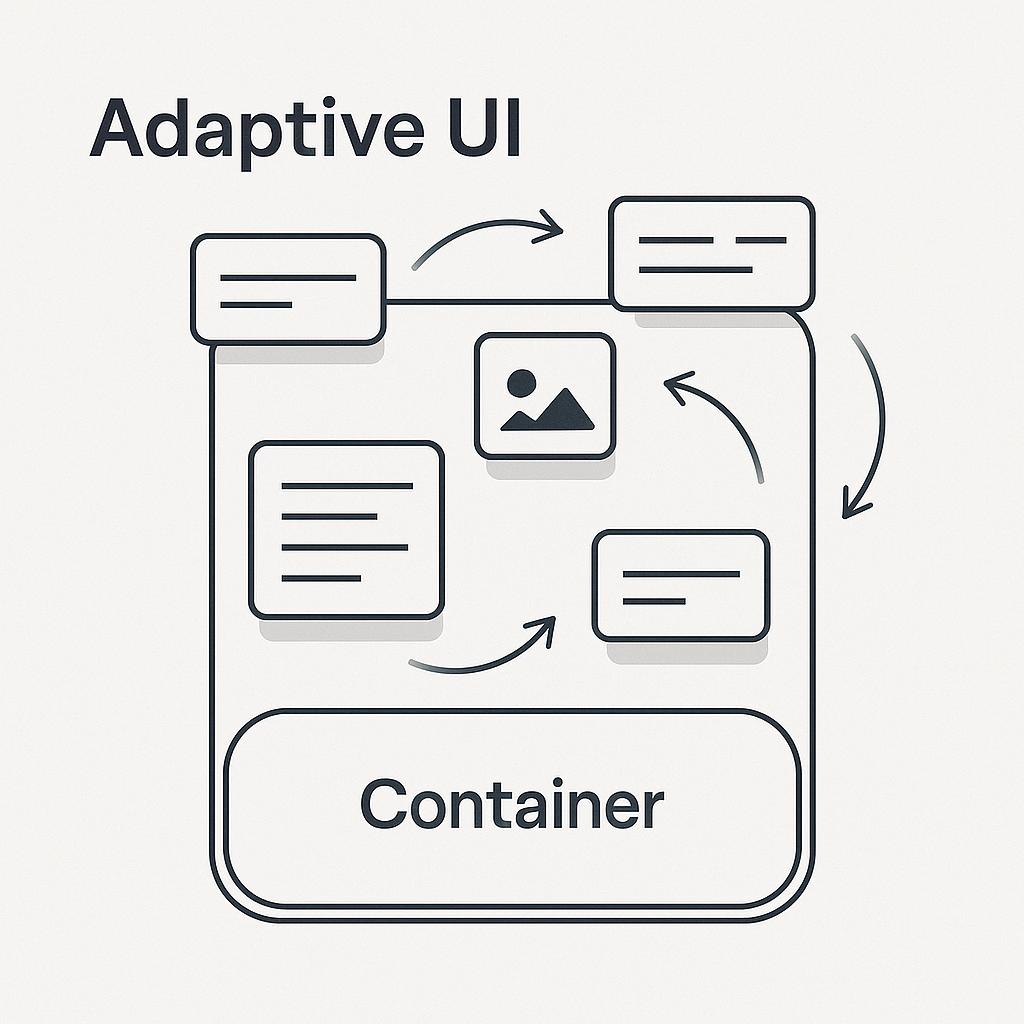
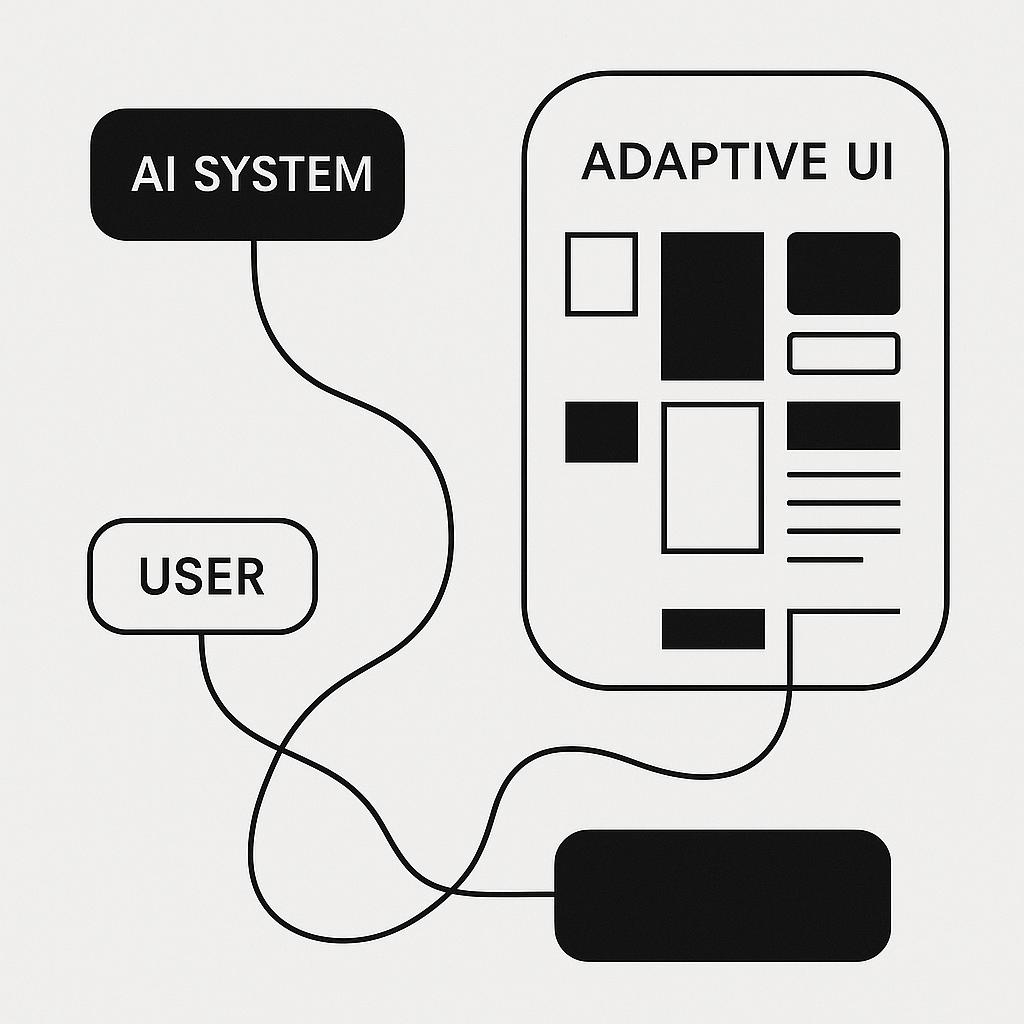
Why can Cursor adapt so quickly to different users? Because it does not design 100 interfaces for you to choose from; instead, it allows the system to dynamically generate interfaces based on your usage patterns, behaviors, and pain points. This is the true meaning of “container”:
Designers of the past focused on “how it looks.” Now, designers focus on “under what circumstances does it look like this?”
This is the first principle of AI products.
Trend 2: Design Tools Will Shift from “Canvas Thinking” to “Runtime Thinking”
A memorable part of the interview was: “Figma is a canvas, but AI products need runtime.”
Ryo’s tone was not critical but pointed out a fact that is happening:
The interface of AI products is not pre-drawn; it “grows” during use.
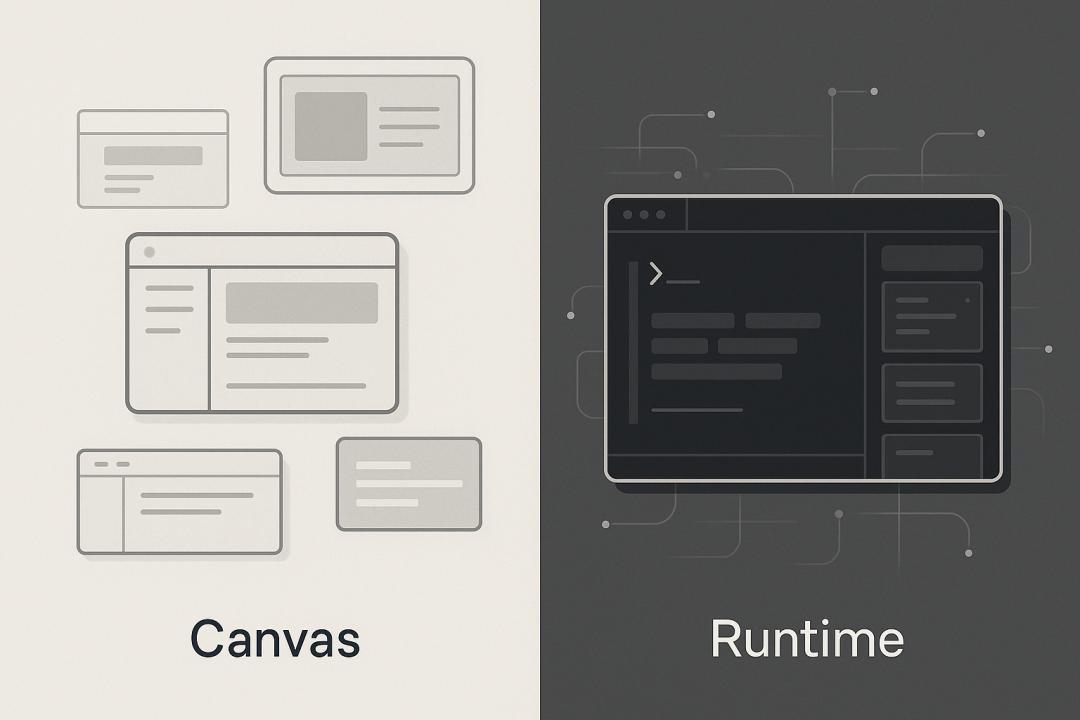
Figma’s logic is:
But AI products are fundamentally different:
- User behavior will change the interface;
- User capabilities will change the interface;
- Current user tasks will change the interface;
- Model states will change the interface.
This means the interface is not a static product but a result of real-time computation.
Future design tools will resemble:
- Generating while running;
- Adjusting while observing;
- Merging design and development experiences into one process.
Trend 3: Product Workflows Will Transition from “Process-Oriented” to “Sculpting-Oriented”
This phrase is very vivid:
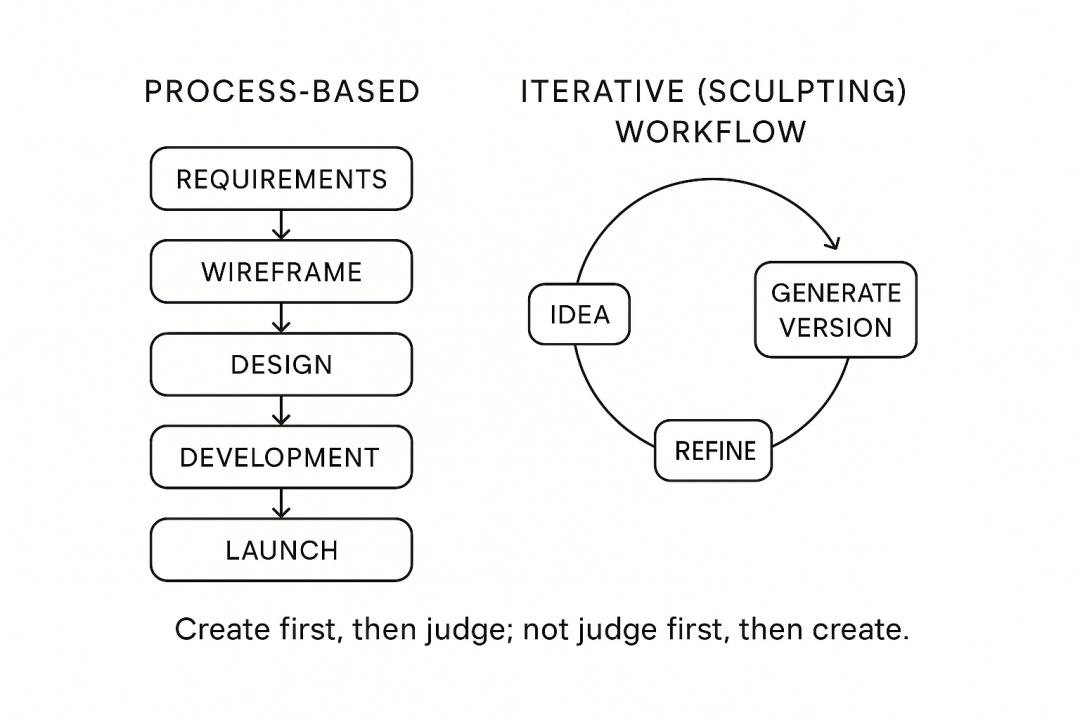
“Traditional products are processes; AI products are sculptures.”
Process-oriented:
Requirements → Wireframe → Design → Development → Launch
Sculpting-oriented:
Idea → Generate a version → Adjust → Regenerate → Adjust again → Until it “takes shape”
This approach is not essentially about speed, but rather:
Lower costs, faster feedback, and no fear of mistakes.
This is the rhythm of AI products:
Create first, then judge; rather than judge first, then create.
Trend 4: Each User Will Experience a Different Product
- Those who can code;
- Those who can code but not well;
- Those who only want to “communicate” in natural language.
These three types of users are doing the same thing (writing software), but they require completely different interfaces.
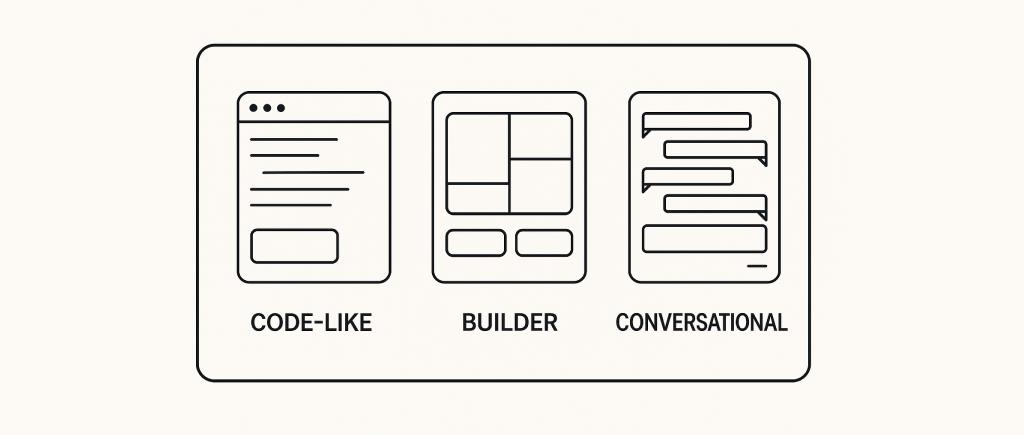
The crucial premise behind this is:
AI products do not serve the “average user”; they serve “you specifically.”
Future products will not have a “fixed homepage.” Your homepage is your own working method.
This is no longer a simple case of “personalized recommendation algorithms” but rather a structural difference in the UI itself:
- Different content densities;
- Different interaction methods;
- Different toolbars;
- Different presentation logics;
- Different prompting strategies.
The true interface is generated by the user.
Trend 5: The Boundaries Between Product Managers, Designers, and Engineers Will Blur
This might be the most easily underestimated point from the interview. Ryo did not state it absolutely, but the meaning is clear:
As toolchains unify, roles will resemble different skill points rather than distinct professional divisions.
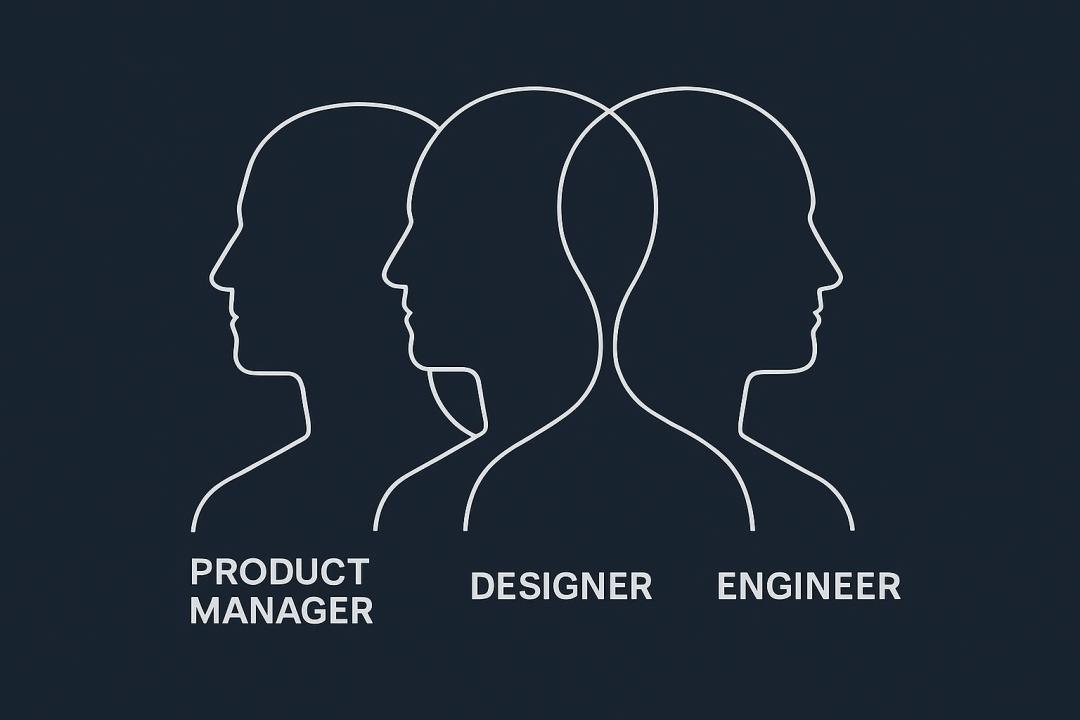
Why?
Because AI will lower costs:
- Designers can generate code;
- Engineers can adjust interfaces;
- Products can run logic directly;
- Models can fill in many repetitive details.
The distinction between roles will no longer be due to “skill barriers” but rather “different focuses.”
In the future, those who create products will resemble a complete creator:
Able to use a single toolchain to complete the entire path from idea to realization.
Conclusion: Cursor Demonstrates Not Just the Future of Tools, but the Future of Products
After watching this interview, my biggest takeaway is:
AI products are not just upgrading; they are being rewritten.
Cursor has demonstrated what the future looks like:
- Interfaces are no longer fixed;
- Logic is no longer linear;
- Users are no longer uniform;
- Roles are no longer fragmented;
- Products are no longer just tools but collaborative entities.
If you want to know where AI products will head in the next 3-5 years, Cursor has already laid out the answer.
Understanding Cursor means understanding the future of AI products.
I will continue to share insights and practices regarding AI products.
Comments
Discussion is powered by Giscus (GitHub Discussions). Add
repo,repoID,category, andcategoryIDunder[params.comments.giscus]inhugo.tomlusing the values from the Giscus setup tool.